Additive Manufacturing: How 3D Printing Is Reconfiguring Industrial Production in 2026
From Prototyping Tool to Production Infrastructure
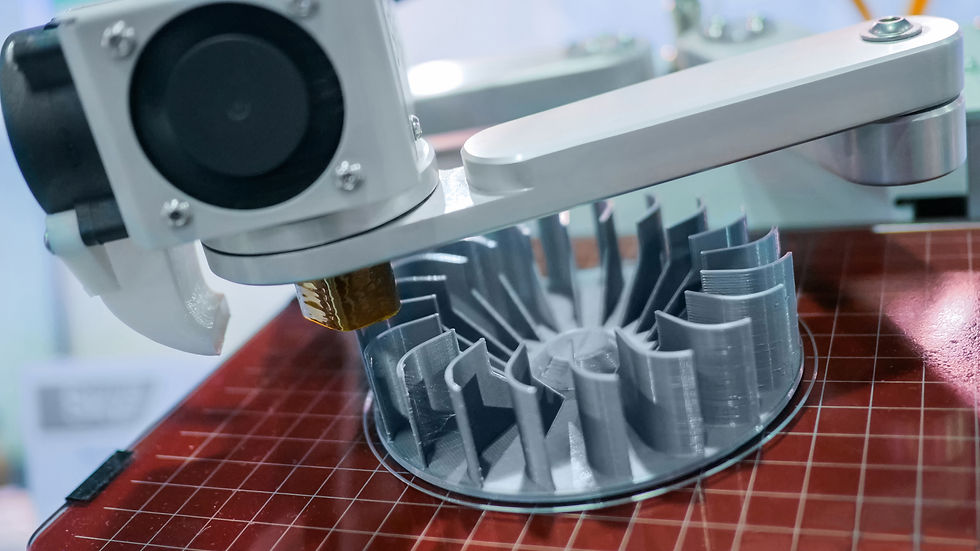
By 2026, additive manufacturing has moved beyond its origins in rapid prototyping and is increasingly embedded within industrial production environments. The technology is no longer defined by novelty, but by its capacity to alter how products are designed, manufactured, and distributed.
Traditional manufacturing has historically relied on scale, standardization, and complex supply chains. Additive manufacturing challenges this model by enabling decentralized production, reduced material waste, and design flexibility unconstrained by conventional tooling limitations.
The result is not a wholesale replacement of traditional manufacturing, but a structural rebalancing. Additive methods are being deployed where complexity, customization, or supply chain efficiency justify their economic profile.
Design Freedom and Engineering Efficiency
A defining advantage of additive manufacturing lies in its ability to produce geometrically complex components without incremental cost. This enables engineers to redesign parts for performance rather than manufacturability.
In aerospace, weight reduction is a primary objective. Additive manufacturing allows for lattice structures and optimized geometries that reduce mass while maintaining structural integrity. This translates directly into fuel efficiency and operating cost reductions.
In automotive, the technology is accelerating development cycles. Rapid iteration and prototyping enable faster product refinement, while selective deployment in production supports lightweighting and performance optimization.
The broader implication is a shift toward design-led manufacturing, where engineering outcomes are no longer constrained by production limitations.
Sectoral Adoption and Commercial Deployment
Adoption is expanding across multiple sectors, each leveraging additive manufacturing for distinct advantages.
In healthcare, customization is the central driver. Patient-specific implants, prosthetics, and surgical tools are being produced with high precision, improving clinical outcomes and reducing production lead times. Bioprinting, while still developing, represents a longer-term frontier with significant potential.
In aerospace and defense, additive manufacturing is increasingly integrated into certified production processes. The ability to produce complex components with fewer assembly steps reduces failure points and enhances reliability.
In industrial manufacturing, spare parts production is being transformed. On-demand manufacturing reduces inventory requirements and enables faster response to maintenance needs, particularly in remote or asset-intensive environments.
Consumer-facing applications are also evolving. While mass customization remains selective, premium segments such as luxury goods and specialized equipment are adopting additive processes to differentiate product offerings.
Supply Chain Reconfiguration and Localized Production
One of the most significant structural implications of additive manufacturing is its impact on supply chains. Traditional models rely on centralized production and global distribution. Additive manufacturing enables localized, on-demand production closer to the point of use.
This reduces lead times, lowers transportation costs, and mitigates supply chain risk. The relevance of this model has increased in response to recent global disruptions, which exposed vulnerabilities in extended supply networks.
Inventory management is also being redefined. Digital inventories—where designs are stored and produced as required—replace physical stock in certain applications. This reduces working capital requirements and improves operational flexibility.
For logistics and industrial operators, this represents both a challenge and an opportunity. The redistribution of production capacity alters freight flows, warehouse demand, and distribution strategies.
Material Innovation and Capability Expansion
Material development remains central to the expansion of additive manufacturing. Early limitations in material performance restricted applications to non-critical components. By 2026, advances in metals, polymers, and composites are enabling use in high-performance environments.
High-strength alloys, heat-resistant materials, and bio-compatible polymers are expanding the addressable market. Material science is now a core area of investment, with performance characteristics directly influencing adoption across sectors.
However, material diversity remains constrained relative to traditional manufacturing. Continued development is required to achieve broader applicability, particularly in heavy industry and large-scale production.
Economics and Production Scalability
The economic profile of additive manufacturing differs fundamentally from traditional production. It reduces tooling costs and enables low-volume, high-complexity production at competitive cost. However, for high-volume standardized products, traditional methods often remain more efficient.
Scalability is therefore selective. Additive manufacturing is most effective where complexity, customization, or supply chain efficiency outweigh the benefits of mass production.
Production speed is improving but remains a limiting factor in certain applications. Advances in multi-material printing, faster deposition methods, and parallel production systems are addressing this constraint, but full parity with traditional manufacturing in high-volume environments is not yet achieved.
The strategic implication is that additive manufacturing will coexist with traditional methods, integrated within hybrid production models.
Investment Landscape and Strategic Positioning
Investment in additive manufacturing is concentrated across several key areas.
Advanced materials represent a primary focus. Companies developing high-performance materials are critical to expanding industrial use cases and enabling adoption in regulated sectors.
Industrial-grade printing systems are another core segment. Scalable, high-speed machines capable of consistent output are essential for transitioning from prototyping to production.
Software platforms are increasingly important. Design optimization tools, simulation software, and digital workflow systems enable more efficient use of additive technologies and integrate them into broader manufacturing processes.
Emerging applications are also attracting capital. Construction, energy, and electronics are exploring additive manufacturing as a means of reducing cost and increasing design flexibility.
Supply chain applications represent a particularly compelling opportunity. Platforms that enable distributed manufacturing and digital inventory management are positioned to capture value as production models evolve.
Regulatory and Intellectual Property Considerations
Regulation plays a significant role in sectors such as healthcare and aerospace, where product certification and safety standards are critical. Additive manufacturing introduces new validation requirements, as production processes differ from traditional methods.
Establishing consistent quality standards and certification frameworks is essential for broader adoption in these sectors. Progress is being made, but regulatory alignment remains an ongoing process.
Intellectual property presents a distinct challenge. The digitization of design files increases the risk of replication and unauthorized production. Protecting proprietary designs requires both legal frameworks and technological safeguards.
Companies must balance accessibility and collaboration with the need to secure intellectual assets.
Execution Risk and Industrial Integration
Integrating additive manufacturing into existing industrial systems requires careful execution. Legacy production processes, workforce capability, and organizational structure must adapt to accommodate new technologies.
Workforce training is a key consideration. Engineers, operators, and designers require new skill sets to effectively utilize additive systems. This transition is gradual and requires sustained investment.
Operational integration is equally important. Additive manufacturing must be aligned with procurement, logistics, and production planning systems to realize its full value.
Failure to integrate effectively can result in underutilized capacity and suboptimal returns on investment.
Forward Outlook: Distributed, Digital Manufacturing Systems
Additive manufacturing is progressing toward a model of distributed, digitally driven production. Physical manufacturing capacity is increasingly complemented by digital design and data infrastructure, enabling production to occur where and when it is needed.
The long-term impact is a redefinition of industrial value chains. Production, inventory, and distribution become more fluid, with reduced dependency on centralized facilities and extended supply networks.
For investors and operators, the opportunity lies in identifying platforms that can operate within this evolving framework. Value will accrue to those who can integrate materials, machines, software, and supply chain strategy into a cohesive system.
Additive manufacturing is not a replacement technology. It is an enabling layer that reshapes how industries approach design, production, and distribution. Its influence will continue to expand as material capability improves and industrial integration deepens.
Connect with XCAP Alliance
XCAP Alliance is a global investment banking firm operating across private capital markets, with senior practitioners positioned across key financial centers in North America, South America, Europe, the Middle East, Israel, Asia, and Australia.
The firm advises on mergers and acquisitions, capital raising, and complex cross-border transactions, delivering mandates that require disciplined structuring, institutional-grade execution, and coordinated access to global capital. Engagement is defined by precision, confidentiality, and alignment between capital providers, corporate clients, and transaction counterparties.
XCAP Alliance operates through an integrated global platform combining origination capability, execution expertise, and established relationships with private equity sponsors, sovereign institutions, family offices, credit funds, and strategic acquirers. Opportunities are assessed and advanced within a structured framework designed to ensure relevance, quality, and alignment with investor mandates and capital deployment strategies.
The firm engages selectively on transactions requiring coordination across jurisdictions, sectors, and capital sources. All engagement is undertaken on a confidential basis.
Further information is available at www.xcapalliance.com


Comments