Reshoring Manufacturing: Cross-Border Capital and the Reconfiguration of Industrial Supply Chains in 2026
Reshoring as a Structural Realignment of Production
By 2026, reshoring is no longer a cyclical response to disruption. It represents a structural reconfiguration of global manufacturing, driven by the need for supply chain resilience, geopolitical insulation, and tighter control over production.
The historical model of cost-driven offshoring is being reassessed. While labor arbitrage once justified extended supply chains, the cumulative impact of rising wages, logistical volatility, and geopolitical risk has altered the economic equation.
Reshoring is therefore not a reversal of globalization, but a recalibration. Production is being redistributed, with a greater emphasis on regionalization, redundancy, and operational control.
Economic and Geopolitical Drivers of Reshoring
Cost dynamics have shifted materially. Labor cost convergence across key manufacturing hubs has reduced the relative advantage of offshore production, particularly when adjusted for transport, inventory, and risk premiums.
Geopolitical considerations are now central to manufacturing strategy. Trade tensions, sanctions regimes, and regional instability have exposed vulnerabilities in concentrated supply chains. Companies are actively diversifying production locations and, in many cases, relocating critical operations closer to core markets.
Supply chain resilience has become a board-level priority. The disruptions of recent years have demonstrated the cost of dependency on distant production nodes. Localized manufacturing provides greater visibility, faster response capability, and reduced exposure to external shocks.
Sustainability considerations further reinforce this trend. Shorter supply chains reduce transport emissions and support alignment with environmental targets, particularly where domestic production can be integrated with renewable energy sources.
Cross-Border Capital as a Catalyst for Domestic Reindustrialization
Reshoring is capital intensive. Modern domestic production requires advanced infrastructure, automation, and digital integration to remain competitive with established offshore capacity.
Cross-border investment plays a critical role in enabling this transition. Capital flows are supporting the redevelopment of industrial assets, the deployment of advanced manufacturing technologies, and the scaling of new production platforms.
Strategic investors, private equity, and sovereign capital are participating in transactions that combine local production with global expertise. This includes joint ventures, minority investments, and full acquisitions designed to accelerate capability development.
Technology transfer is a central component of these investments. Advanced manufacturing processes, digital systems, and operational expertise are being introduced into reshored facilities, improving productivity and offsetting higher labor costs.
Modernization of Industrial Infrastructure
Reshoring is closely linked to the modernization of manufacturing infrastructure. Legacy facilities are being upgraded or replaced with highly automated, digitally integrated production environments.
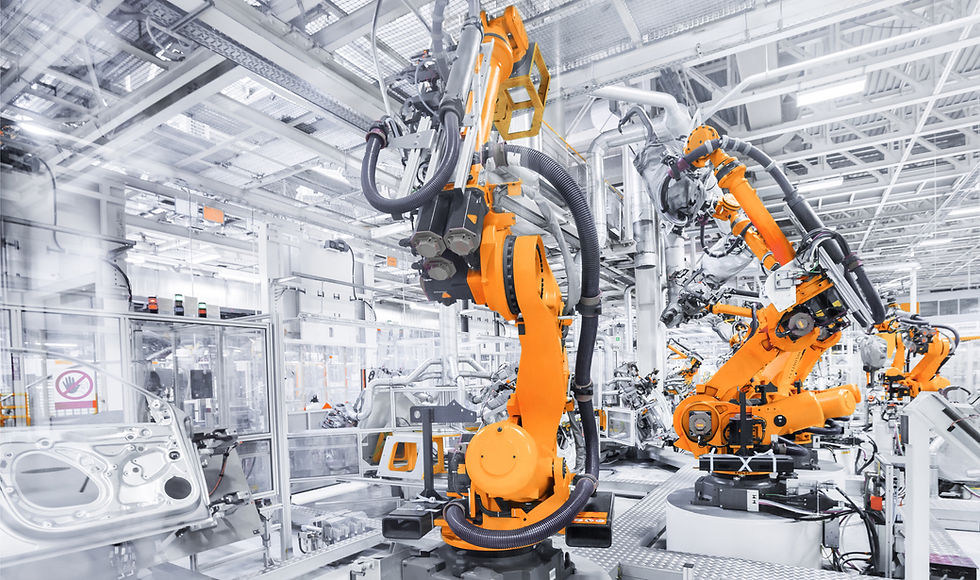
Automation is a key enabler. Robotics, AI-driven production systems, and advanced process control reduce reliance on labor and improve consistency. This allows domestic manufacturing to compete on efficiency rather than cost alone.
Digital integration is equally important. Connected systems enable real-time monitoring, predictive maintenance, and dynamic production scheduling, enhancing operational performance and reducing downtime.
Energy infrastructure is also being reconfigured. Integration of renewable energy, on-site generation, and energy management systems supports both cost stability and ESG alignment.
The result is a new generation of industrial assets that differ fundamentally from traditional manufacturing facilities in both capability and economic profile.
Sectoral Opportunities and Strategic Focus Areas
Reshoring is not uniform across all sectors. It is most pronounced in industries where supply chain disruption carries high cost or strategic risk.
Advanced manufacturing sectors, including semiconductors, precision engineering, and high-value components, are prioritizing domestic production to ensure continuity and control.
Critical industries such as healthcare, defense, and energy are also reshoring elements of their supply chains to reduce dependency on external suppliers.
Consumer goods manufacturing is adopting hybrid models, combining regional production hubs with selective offshore capacity to balance cost and responsiveness.
Investment opportunities are concentrated in enabling technologies, including automation systems, additive manufacturing, and AI-driven production platforms. These technologies are essential to making reshored operations economically viable.
Workforce development is another key area. Investment in training, education, and technical capability is required to support advanced manufacturing environments.
Labor Constraints and Human Capital Considerations
Labor availability represents a structural challenge in reshoring. Many developed markets face shortages of skilled industrial workers, particularly in technical and engineering roles.
This constraint is partially mitigated by automation, but human expertise remains critical for system design, maintenance, and oversight.
Workforce transformation is therefore a central component of reshoring strategy. Companies are investing in training programs, partnerships with educational institutions, and internal capability development to build the required talent base.
The ability to attract and retain skilled labor is becoming a differentiator in manufacturing performance.
Regulatory Environment and Policy Alignment
Government policy is actively supporting reshoring in many jurisdictions. Incentives, tax benefits, and direct funding programs are being deployed to attract manufacturing investment and rebuild domestic industrial capacity.
However, regulatory complexity remains a consideration. Environmental standards, labor regulations, and permitting processes can increase the cost and timeline of new projects.
For cross-border investors, navigating these frameworks requires local expertise and careful structuring. Alignment with policy objectives can facilitate approvals and access to incentives, but misalignment can create material delays.
Trade policy also influences reshoring decisions. Tariffs, export controls, and localization requirements are shaping the economic viability of different production models.
Execution Risk and Capital Discipline
Reshoring initiatives carry execution risk. Capital expenditure requirements are significant, and returns are dependent on achieving operational efficiency at scale.
Cost overruns, delays in facility development, and challenges in integrating new technologies can impact project viability. Careful planning, phased investment, and disciplined execution are essential.
Integration of cross-border investment structures introduces additional complexity. Aligning strategic objectives, governance frameworks, and operational practices across jurisdictions requires coordination and clarity.
Investors must balance long-term strategic positioning with near-term financial performance, recognizing that reshoring often involves extended investment horizons.
Forward Outlook: Regionalized, Technology-Driven Manufacturing Networks
The trajectory of reshoring points toward regionalized manufacturing networks supported by advanced technology and integrated supply chains. Production will increasingly be distributed across key markets, reducing dependency on single geographies while maintaining global coordination.
Digital infrastructure will enable these networks to operate cohesively, with real-time data supporting coordination across multiple production sites.
Cross-border investment will remain central, not as a mechanism for offshoring, but as a means of transferring capital, technology, and expertise into localized production environments.
For investors and operators, the opportunity lies in identifying platforms that can operate effectively within this hybrid model—combining local production capability with global integration.
Reshoring is not a temporary adjustment. It is a long-term structural shift in how manufacturing is organized, financed, and executed. Those who align capital, technology, and strategy with this shift will be positioned to capture value as industrial systems continue to evolve.
Connect with XCAP Alliance
XCAP Alliance is a global investment banking firm operating across private capital markets, with senior practitioners positioned across key financial centers in North America, South America, Europe, the Middle East, Israel, Asia, and Australia.
The firm advises on mergers and acquisitions, capital raising, and complex cross-border transactions, delivering mandates that require disciplined structuring, institutional-grade execution, and coordinated access to global capital. Engagement is defined by precision, confidentiality, and alignment between capital providers, corporate clients, and transaction counterparties.
XCAP Alliance operates through an integrated global platform combining origination capability, execution expertise, and established relationships with private equity sponsors, sovereign institutions, family offices, credit funds, and strategic acquirers. Opportunities are assessed and advanced within a structured framework designed to ensure relevance, quality, and alignment with investor mandates and capital deployment strategies.
The firm engages selectively on transactions requiring coordination across jurisdictions, sectors, and capital sources. All engagement is undertaken on a confidential basis.
Further information is available at www.xcapalliance.com


Comments