The Role of AI in Optimizing Logistics Networks

AI as Core Infrastructure in Modern Logistics
By 2026, artificial intelligence is no longer positioned as an enhancement layer within logistics networks. It is increasingly embedded as core operational infrastructure, governing how goods are routed, assets are deployed, and decisions are executed in real time.
Logistics networks have reached a level of complexity where traditional planning models are insufficient. Fragmented supply chains, volatile demand patterns, and increasing service expectations require systems capable of continuous optimization. AI addresses this by processing large-scale data inputs and translating them into actionable operational decisions with speed and precision.
The result is a transition from reactive logistics models to predictive and autonomous systems.
Predictive Intelligence and Demand Calibration
Predictive analytics represents one of the most mature applications of AI within logistics. By analyzing historical data, seasonal patterns, and real-time inputs, AI models can forecast demand with increasing accuracy.
This capability directly impacts inventory management, warehouse allocation, and transport planning. Companies can position inventory closer to demand centers, reduce excess stock, and minimize stockouts. The financial implications are material, particularly in high-volume or time-sensitive supply chains.
Demand calibration is also enabling more efficient capital deployment. Operators can align capacity with expected demand, reducing idle assets and improving return on infrastructure investment.
Dynamic Routing and Network Optimization
AI-driven route optimization has evolved beyond static planning tools. Modern systems operate dynamically, adjusting routes in real time based on traffic conditions, weather disruptions, delivery windows, and asset availability.
This capability reduces transit times, lowers fuel consumption, and improves delivery reliability. At scale, even marginal efficiency gains translate into significant cost savings.
Network optimization extends beyond individual routes. AI systems are increasingly managing entire logistics ecosystems, determining how goods should move across multiple nodes, including warehouses, ports, and distribution centers.
The objective is not simply speed, but optimal allocation of resources across the network.
Real-Time Visibility and Control Systems
End-to-end visibility has become a baseline requirement in logistics. AI-enabled tracking systems provide continuous monitoring of shipments, assets, and operational performance.
These systems allow operators to identify disruptions as they occur and implement corrective actions immediately. Delays, bottlenecks, and capacity constraints can be addressed in real time, reducing the downstream impact on delivery schedules.
For customers, enhanced visibility translates into more accurate delivery windows and improved service reliability. For operators, it provides a control layer that improves decision-making and operational discipline.
Autonomous Systems and Process Automation
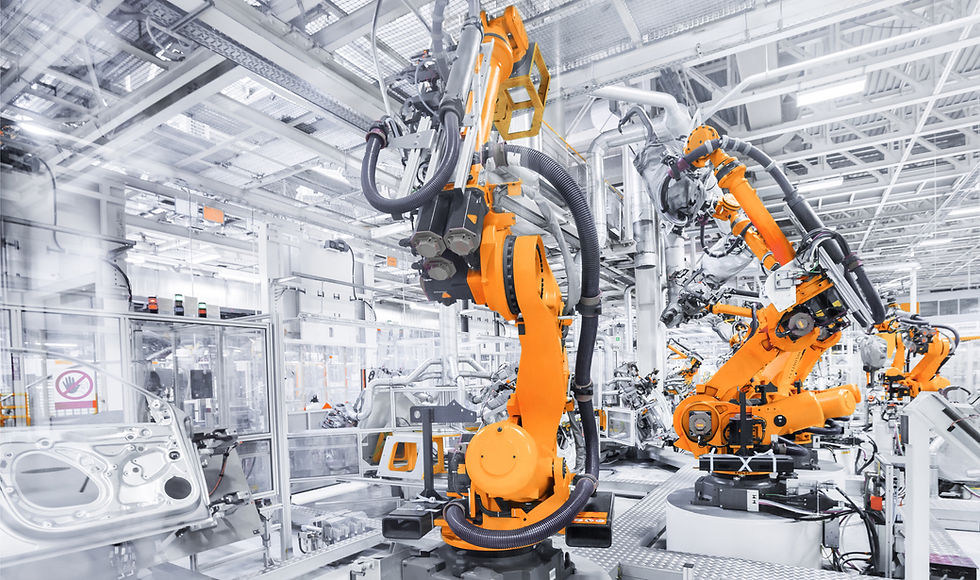
Automation within logistics is increasingly being driven by AI. Autonomous vehicles, robotic warehouse systems, and automated sorting technologies are all underpinned by machine learning and computer vision capabilities.
While full autonomy in complex urban environments remains constrained, controlled environments such as warehouses, ports, and logistics hubs are already operating with high levels of automation.
These systems reduce labor dependency, improve consistency, and enable continuous operation. Over time, they are expected to materially alter cost structures within the logistics sector.
The integration of autonomous systems with AI-driven decision platforms creates a feedback loop, where operational data continuously refines system performance.
Data as the Operating Layer
AI is fundamentally dependent on data. Logistics networks generate vast volumes of information across transport, inventory, customer interaction, and infrastructure usage.
The ability to capture, structure, and analyze this data is now a core competitive capability. Companies that can integrate data across their networks achieve superior optimization outcomes and more accurate forecasting.
Data quality is critical. Incomplete or inconsistent datasets can undermine AI performance, leading to suboptimal decisions. As a result, investment in data governance, standardization, and infrastructure is a prerequisite for effective AI deployment.
The convergence of AI and data is transforming logistics into a continuously learning system, where performance improves over time through iterative optimization.
Investment Landscape and Strategic Opportunities
AI-driven logistics presents a broad investment landscape across multiple layers of the value chain.
Software platforms remain a primary focus. Companies developing AI-powered logistics management systems, predictive analytics tools, and optimization engines are attracting significant capital, particularly where solutions demonstrate scalability across large networks.
Automation technologies represent another key segment. Robotics, autonomous transport systems, and intelligent warehouse solutions are integral to the next phase of logistics infrastructure.
Data analytics and decision-support platforms are also gaining prominence. These systems enable operators to extract actionable insights from complex datasets, supporting both operational efficiency and strategic planning.
Integration platforms that unify disparate systems into a cohesive operational framework are particularly valuable. As logistics networks become more complex, the ability to coordinate multiple technologies within a single architecture is a defining advantage.
Implementation Challenges and Execution Risk
Despite strong momentum, AI deployment within logistics is not without constraint. Integration complexity remains a primary challenge. Many logistics operators are working with legacy systems that are not designed to support advanced analytics or real-time decision-making.
Transitioning to AI-enabled systems requires significant investment in both technology and organizational change. Implementation must be carefully managed to avoid disruption to ongoing operations.
Data security is another critical consideration. Logistics networks handle sensitive commercial and operational data, making them potential targets for cyber threats. Robust security frameworks are essential to protect both data integrity and business continuity.
Talent availability is also a constraint. The deployment and management of AI systems require specialized expertise in data science, engineering, and systems integration. Building and retaining this capability is a key strategic priority.
Competitive Dynamics and Industry Consolidation
AI capability is becoming a differentiator in logistics competition. Operators with advanced analytics and automation systems are achieving superior efficiency, faster delivery times, and improved customer experience.
This is driving consolidation, as larger platforms acquire technology providers and smaller operators to enhance capability and scale. Technology-enabled logistics businesses are commanding premium valuations, reflecting their ability to operate more efficiently and adapt to changing market conditions.
Partnership models are also emerging. Collaboration between logistics providers, technology firms, and data platforms allows for shared development and faster deployment of AI solutions.
Forward Outlook: Autonomous and Predictive Logistics Networks
The long-term trajectory of logistics is toward autonomous, self-optimizing networks. AI will increasingly manage not only individual processes but entire supply chains, coordinating movement, inventory, and infrastructure in real time.
Human oversight will remain, but the role will shift toward strategic control rather than operational execution. Decision-making will be supported—and in many cases executed—by AI systems operating at scale.
For investors, the opportunity lies in identifying platforms that can integrate AI across the full logistics stack. Value will accrue to those capable of combining data, infrastructure, and automation into a unified operating model.
AI is not an incremental improvement. It is redefining how logistics networks function, how capital is deployed, and how competitive advantage is established. The sector is moving toward a model where intelligence, rather than scale alone, determines performance.
Connect with XCAP Alliance
XCAP Alliance is a global investment banking firm operating across private capital markets, with senior practitioners positioned across key financial centers in North America, South America, Europe, the Middle East, Israel, Asia, and Australia.
The firm advises on mergers and acquisitions, capital raising, and complex cross-border transactions, delivering mandates that require disciplined structuring, institutional-grade execution, and coordinated access to global capital. Engagement is defined by precision, confidentiality, and alignment between capital providers, corporate clients, and transaction counterparties.
XCAP Alliance operates through an integrated global platform combining origination capability, execution expertise, and established relationships with private equity sponsors, sovereign institutions, family offices, credit funds, and strategic acquirers. Opportunities are assessed and advanced within a structured framework designed to ensure relevance, quality, and alignment with investor mandates and capital deployment strategies.
The firm engages selectively on transactions requiring coordination across jurisdictions, sectors, and capital sources. All engagement is undertaken on a confidential basis.
Further information is available at www.xcapalliance.com


Comments