Edge Computing and the Scaling of Technology Businesses: Infrastructure, Execution, and Strategic Positioning
- mpenevski
- Dec 3, 2024
- 5 min read
Updated: Mar 22
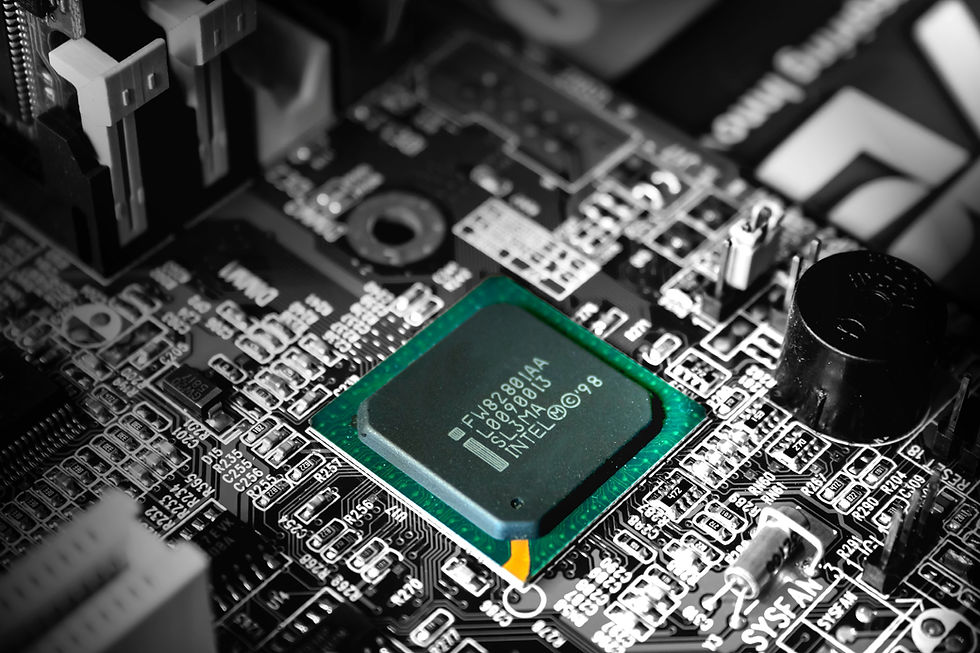
Understanding Edge Computing
Edge computing represents a structural shift in how data is processed, distributed, and monetized across modern technology ecosystems. Rather than relying exclusively on centralized cloud architecture, processing capability is moved closer to the point of data generation. This reduces latency, improves system responsiveness, and enables real-time decision-making across environments where speed and reliability are critical.
The relevance of edge computing is not confined to technical optimization. It is emerging as a foundational layer of digital infrastructure, particularly in sectors where continuous data generation intersects with operational execution. Autonomous systems, industrial automation, healthcare diagnostics, logistics networks, and smart urban environments all require processing architectures that can operate with minimal delay and high reliability. Centralized systems, while scalable, introduce latency and bandwidth constraints that become increasingly material as data volumes expand.
For growth-stage technology businesses, the adoption of edge architecture is therefore not simply a technical decision. It is a strategic one, influencing product capability, scalability, cost structure, and ultimately enterprise value.
Infrastructure as a Driver of Scalable Growth
Scaling a technology business requires more than user acquisition and revenue expansion. It requires infrastructure capable of supporting increasing data intensity without compromising performance. Edge computing addresses this constraint by decentralizing processing workloads, allowing systems to operate efficiently at scale.
In practical terms, this enables:
real-time processing of high-frequency data streams
reduced dependency on centralized compute and storage environments
improved system resilience through distributed architecture
enhanced user experience through lower latency and faster response times
For applications such as autonomous navigation, remote diagnostics, and industrial monitoring, these characteristics are not optional. They are fundamental to product viability. Businesses operating in these environments must deliver consistent performance under conditions where delays or failures carry operational or financial consequences.
As a result, edge infrastructure is increasingly embedded within the core architecture of high-growth technology companies rather than layered on as an enhancement.
Commercial Implications and Cost Structure
Beyond performance, edge computing alters the economic profile of technology businesses. Centralized cloud models often involve significant data transfer, storage, and processing costs that scale with usage. As data volumes increase, these costs can compress margins, particularly for businesses operating on high-frequency or real-time data models.
Edge architecture mitigates this by reducing the volume of data transmitted to centralized systems. Processing is conducted locally, with only relevant or aggregated data transmitted for storage or further analysis. This reduces bandwidth requirements and associated costs, while improving overall system efficiency.
The implication is a more controllable cost base. For scaling businesses, this enables capital to be allocated toward product development, market expansion, and operational growth rather than infrastructure overhead.
From an investment perspective, infrastructure efficiency is increasingly a factor in valuation. Businesses that demonstrate scalable, cost-efficient architectures are positioned more favorably than those reliant on models that introduce margin pressure at scale.
Sector-Specific Adoption and Use Cases
Adoption of edge computing is most advanced in sectors where real-time data processing directly influences outcomes.
In healthcare, edge-enabled systems support immediate analysis of medical imaging and patient data, reducing diagnostic timelines and improving treatment responsiveness. In manufacturing, distributed sensors and edge devices enable predictive maintenance, identifying equipment failures before they occur and minimizing downtime. In logistics and autonomous systems, edge processing allows for real-time navigation, route optimization, and operational decision-making without reliance on continuous cloud connectivity.
Retail and consumer applications are also evolving. Personalization engines, in-store analytics, and real-time customer engagement systems increasingly rely on localized data processing to deliver responsive experiences.
These use cases illustrate a broader point: edge computing is not sector-specific. It is an enabling layer across industries where data, speed, and decision-making intersect.
Investment Dynamics and Transaction Considerations
Edge computing has attracted sustained interest from venture capital and private equity, particularly in segments associated with infrastructure and enabling technologies. Investment activity is concentrated across:
semiconductor development, including edge AI chips and specialized processors
distributed computing platforms and orchestration software
device-level intelligence and embedded systems
integration layers connecting edge environments with centralized cloud architecture
From an M&A perspective, acquisition strategies are increasingly focused on securing control over critical components within this stack. Hardware capability, software orchestration, and data integration are interdependent. Control of one layer without alignment across others limits strategic value.
Valuation within this segment reflects both current capability and future positioning. Many targets operate at early stages of commercialization, with value derived from intellectual property, technical architecture, and potential integration within broader ecosystems.
Due diligence must therefore extend beyond financial performance. Technical validation, scalability assessment, and interoperability with existing systems are central considerations. Where edge solutions must integrate with legacy infrastructure, execution risk becomes a defining factor.
Security, Interoperability, and Regulatory Complexity
The decentralized nature of edge computing introduces additional complexity. Distributed processing environments create multiple points of potential vulnerability, requiring robust security frameworks at both device and network levels.
Cybersecurity is therefore integral to system design rather than an overlay. Data integrity, encryption protocols, and access controls must be embedded within the architecture to ensure resilience against intrusion and data compromise.
Interoperability presents a parallel challenge. Edge systems must integrate seamlessly with centralized cloud infrastructure, legacy systems, and third-party platforms. Fragmentation across vendors or standards can limit scalability and reduce operational efficiency.
Regulatory considerations are also material, particularly in sectors such as healthcare, finance, and critical infrastructure. Data localization requirements, privacy regulations, and cross-border data flows influence how edge systems are designed and deployed.
These factors introduce additional layers of diligence and structuring within transactions involving edge-enabled businesses.
Strategic Outlook: Edge as Core Digital Infrastructure
Edge computing is transitioning from an emerging technology to a core component of digital infrastructure. Its integration with advancements in 5G connectivity, artificial intelligence, and distributed systems is accelerating adoption across industries.
The proliferation of connected devices and IoT ecosystems will continue to increase data generation at the edge of networks. Processing this data efficiently requires architectures that can operate independently of centralized systems while maintaining coordination across broader platforms.
For technology businesses, early adoption of edge infrastructure enables greater control over performance, cost, and scalability. For investors, it provides exposure to a foundational layer of digital transformation with applications across multiple sectors.
Over time, differentiation will be determined not by access to edge capability alone, but by how effectively it is integrated into broader operating models. Businesses that align infrastructure, product design, and execution strategy around distributed processing will be better positioned to scale, compete, and sustain growth in increasingly data-intensive environments.
Connect with XCAP Alliance
XCAP Alliance is a global investment banking firm operating across private capital markets, with senior practitioners positioned across key financial centers in North America, South America, Europe, the Middle East, Israel, Asia, and Australia.
The firm advises on mergers and acquisitions, capital raising, and complex cross-border transactions, delivering mandates that require disciplined structuring, institutional-grade execution, and coordinated access to global capital. Engagement is defined by precision, confidentiality, and alignment between capital providers, corporate clients, and transaction counterparties.
XCAP Alliance operates through an integrated global platform combining origination capability, execution expertise, and established relationships with private equity sponsors, sovereign institutions, family offices, credit funds, and strategic acquirers. Opportunities are assessed and advanced within a structured framework designed to ensure relevance, quality, and alignment with investor mandates and capital deployment strategies.
The firm engages selectively on transactions requiring coordination across jurisdictions, sectors, and capital sources. All engagement is undertaken on a confidential basis.
Further information is available at www.xcapalliance.com.
Enquiries may be directed to team@xcapalliance.com.


Comments